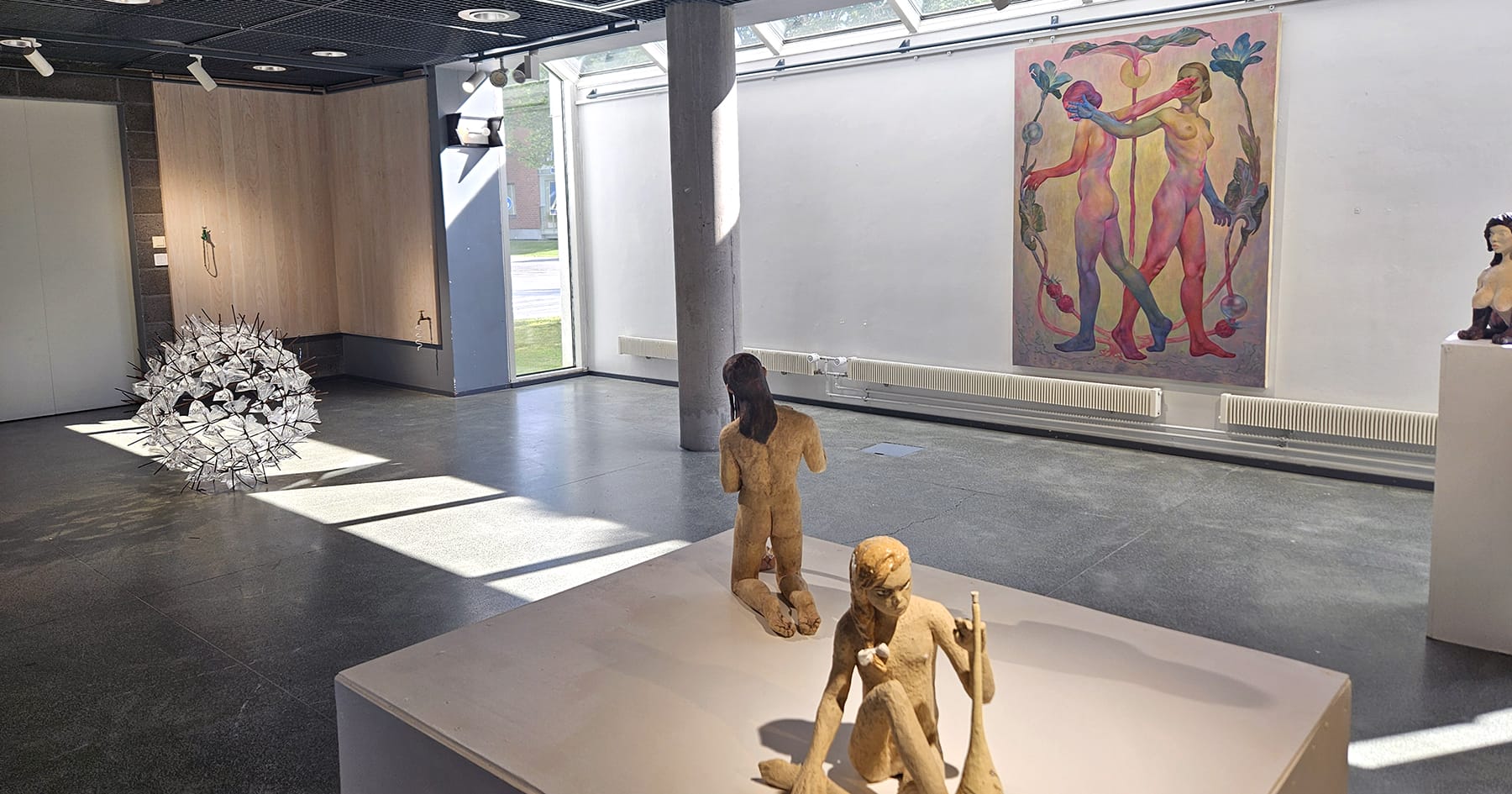
The exhibition features artists of different ages and with diverse artistic practices, all of whom have been active in the field of fine arts.
Everything was still just at the beginning after graduation
One of the artists in the exhibition is Saara Kariranta, who graduated in 2003. She remembers the period after graduation, above all, as the start of a new phase.
– I was, in a way, still very much at the beginning. Many practical things, such as applying for grants, were still unfamiliar to me. During my studies, the focus was more on being an artist, the artworks themselves and growing as an artist, she says.
After graduating, she stayed on in Kankaanpää for another six months and rented her first studio.
– I remember walking into that empty studio and thinking what on earth I was going to do. Suddenly, no one was giving me an assignment, and there was no rush to get anywhere. I could do whatever I wanted.
At the time, she found materials such as recycled plastic containers and polystyrene balls. Not all her experiments have stood the test of time, but some elements have stayed with her for a long time.
– The plastic containers are featured in this exhibition too. Somehow, they always find their way back up, she says with a laugh.
Some things change, while others remain
Although Kariranta’s artistic practice has changed over the years, she also recognizes a long-standing continuity in her works.
– Empathy and compassion have been very much present in all my works. I also explore vulnerability and the hidden strength within it.
Returning to the Fine Arts Campus gallery made this continuity visible in a concrete way. One work in the current exhibition sits almost exactly where Kariranta had a piece in an exhibition during her first year of studies.
– Now, when I look at it, I notice a lot of the same things. The works are different, but there are also points of connection between them. Yes, some things always change, while others remain the same.
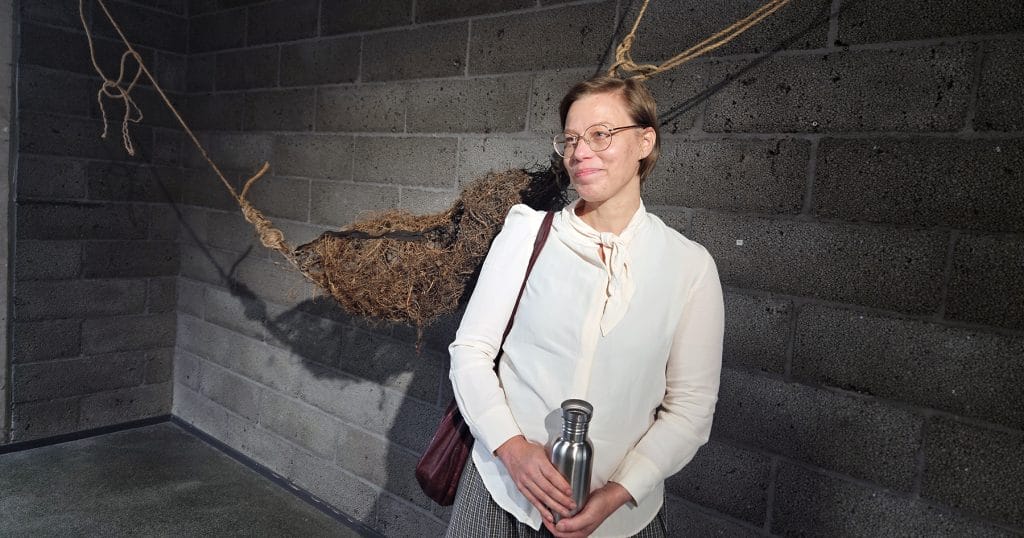
A strong foundation for the artist’s work from Kankaanpää
Since graduating, Kariranta has continued her education, later studying at the Academy of Fine Arts, amongst other places. Nevertheless, the education she received in Kankaanpää can still be seen in her artistic practice.
She considers the strong technical skills and the hands-on approach to teaching particularly significant.
– Looking back, I couldn’t have had a better foundation for becoming a visual artist.
During the studies, the emphasis on hands-on practice did not always seem like such an obvious strength.
– Back then, I sometimes wondered why we didn’t spend more time philosophizing and discussing things. Later, I realized just how strong the technical skills I had gained were.
The sense of community at the Fine Arts Campus has also left a lasting impression on her.
– When you meet someone who studied in Kankaanpää, you immediately feel at home, even if you have never met them before. There’s something very connecting about that shared experience.
The gallery serves as a learning environment for working life
In addition to serving as an exhibition space, the gallery at the Fine Arts Campus provides students with a learning environment for working life. A small group of current students has also been involved in the production and installation of the alumni exhibition.
Working on the exhibition has given the students practical experience of everything involved in producing an exhibition, beyond the artistic work itself. At the same time, they have had the opportunity to work alongside alumni who are active professionals in the field.
For Kariranta, returning to Kankaanpää as an alumni artist has been an emotional experience.
– I have a lot of warm feelings for this place. It feels a bit like coming full circle.
—————
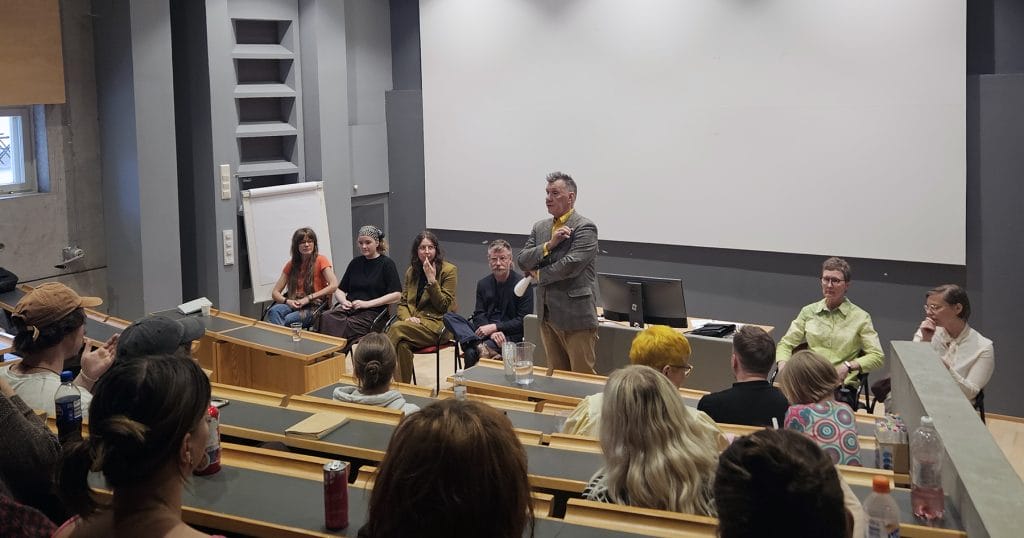
The exhibition and seminar bring the professional working life closer to students
A seminar for visual arts students was organized in connection with the opening of the alumni exhibition. At the seminar, alumni spoke about their art, careers and lives as professional artists after graduation.
The exhibition and seminar complement each other: at the exhibition, students can see the alumni’s current artistic practice, while the seminar offered a closer look at the different stages and choices that have shaped their careers.