The aim is to support students in different life situations and help them progress smoothly through their studies. Student wellbeing is influenced by factors such as social relationships, physical activity, financial circumstances and balancing studies with other aspects of life.
– Supporting students’ wellbeing and ability to study is everyone’s responsibility. Even something as simple as a teacher asking students how they are doing before starting a lesson can make a difference, says Wellbeing Coordinator Maija Penttilä.
In recent years, SAMK has developed student wellbeing services in several ways. Particular emphasis has been placed on guidance, recognising individual needs and cooperation with different wellbeing service providers.
Guidance and support for studies and everyday challenges
SAMK offers students a wide range of guidance and support at different stages of their studies. For example, SAMK Coaching provides help with studies and everyday challenges, Get Stuff Done writing sessions offer opportunities to make progress on assignments, and study workshops provide support with tasks such as writing a thesis.
According to Penttilä, the most important thing is that students know where to seek help before small challenges turn into bigger problems. SAMK has also increased cooperation with external organisations, such as the Finnish Student Health Service (FSHS), Ohjaamo guidance centres and housing counselling services.
Nearly half of SAMK’s students now study in blended or online learning programmes. Many balance their studies with work, family and other everyday responsibilities. This is why SAMK aims to make guidance more accessible and better accommodate different life situations.
– Blended and online learning have increased considerably in recent years. We have realised that we need to take students’ different life situations into account more effectively. In the future, we need to work together to find ways to improve peer support, the sense of community and access to guidance in the evenings and at weekends as well, Penttilä explains.
Student feedback guides development
Around 1,200 students responded to SAMK’s latest student wellbeing survey. The results show that students are motivated: approximately 90% of respondents want to graduate within the target time and are willing to work towards that goal.
Areas identified for improvement included clear instructions, access to guidance, feedback that supports learning and peer support. The survey results are used to set annual development objectives.
– Students still need peer support, interaction and feedback that helps them understand what they have done well and where they could improve, Penttilä says.
Next year, particular attention will be paid to guidance and peer tutoring for students in online and blended learning programmes, as well as providing students with feedback that supports their learning.
Physical activity, community and culture
Student wellbeing is also promoted through physical activity and shared activities. In addition to CampusMove sports services, the Liikkuva kampus (Active Campus) project has introduced active breaks and physical activity into teaching.
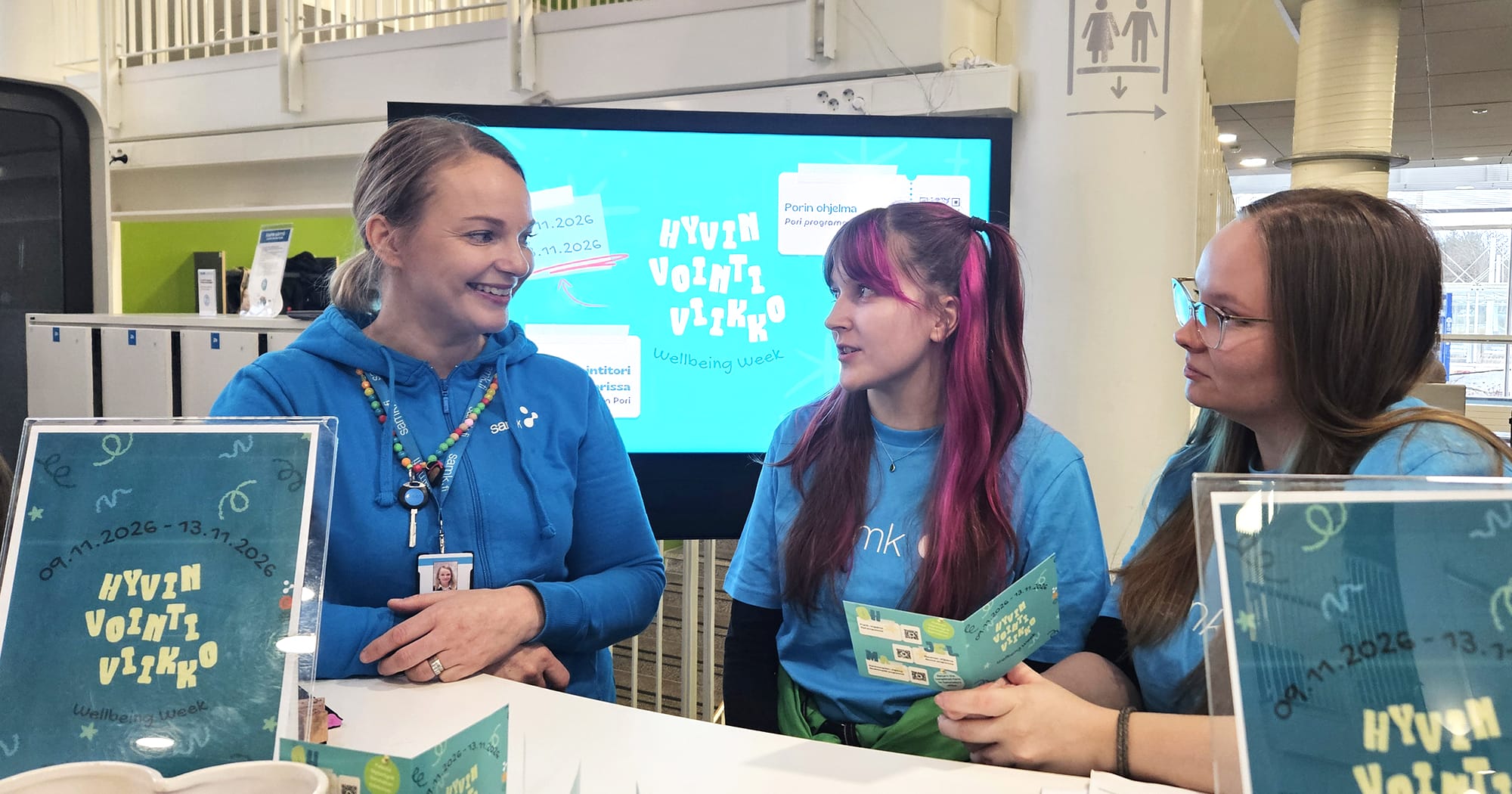
One visible example of SAMK’s wellbeing initiatives is SAMK Wellbeing Week, held in November. Taking place on all campuses, the week’s programme includes physical activities, relaxation, opportunities to spend time together and practical tips for everyday student life. Local partners, such as the museums in Pori, also participate by offering students free cultural experiences.
Originally organised as wellbeing fairs, the event has expanded into a full week of activities. SAMK’s Social Services students are also involved in organising the event.
Penttilä emphasises that promoting wellbeing is the responsibility of the entire higher education community. Even small actions, such as asking students how they are doing, providing encouraging feedback or including breaks in teaching, can make a significant difference.
– Promoting wellbeing does not always require major actions. Feeling part of a community and being acknowledged as an individual support students’ motivation and engagement with their studies. When students feel well and experience a sense of belonging, they are also better equipped to study, learn and progress in their studies.