
New learning material in the making at SAMK ─ Security of solar photovoltaic systems in fire scenarios
Solar photovoltaic systems have become more popular in recent years. Fire and rescue departments have needed material on the topic for long. Now educational material on solar photovoltaic systems and their security in fire scenarios is being prepared at SAMK.
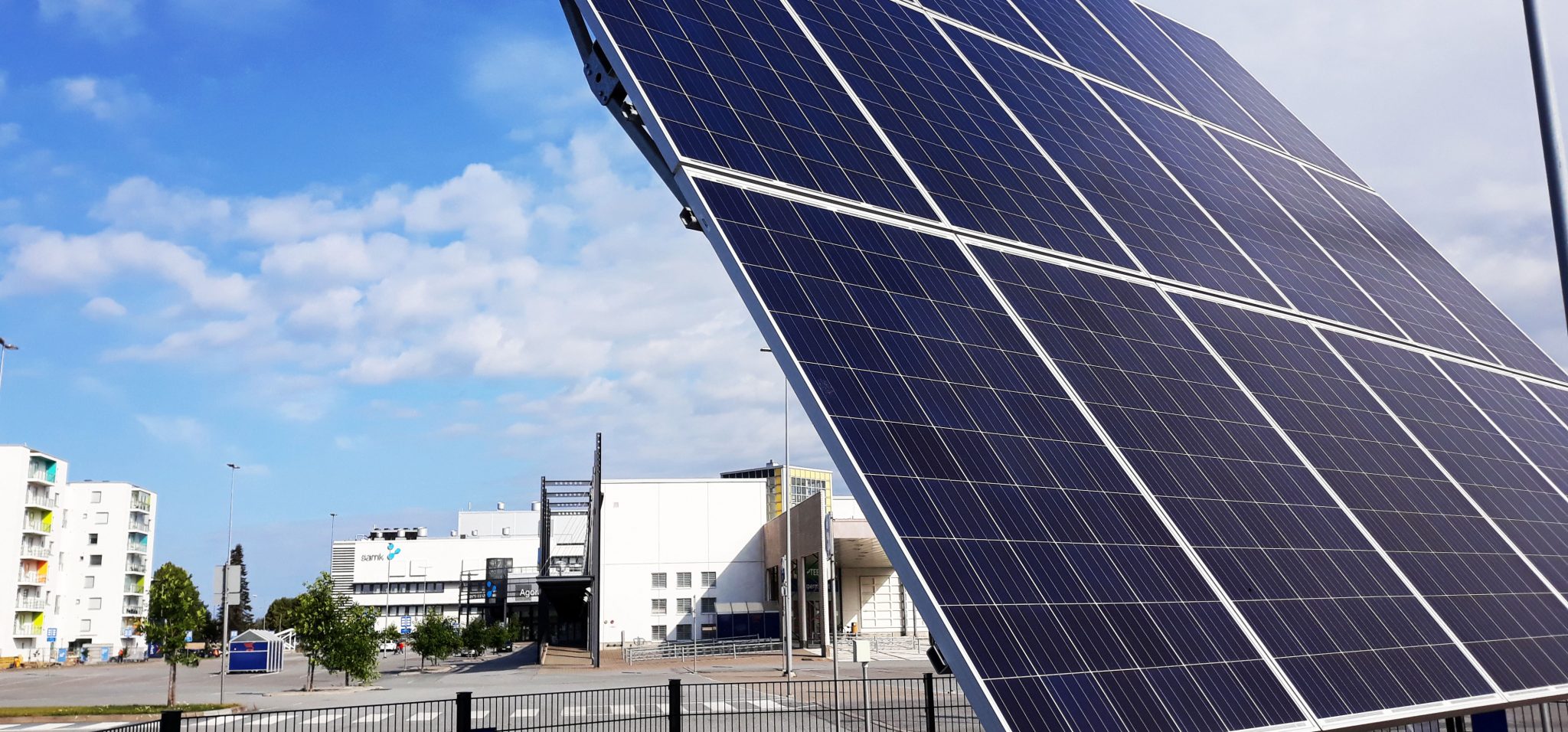
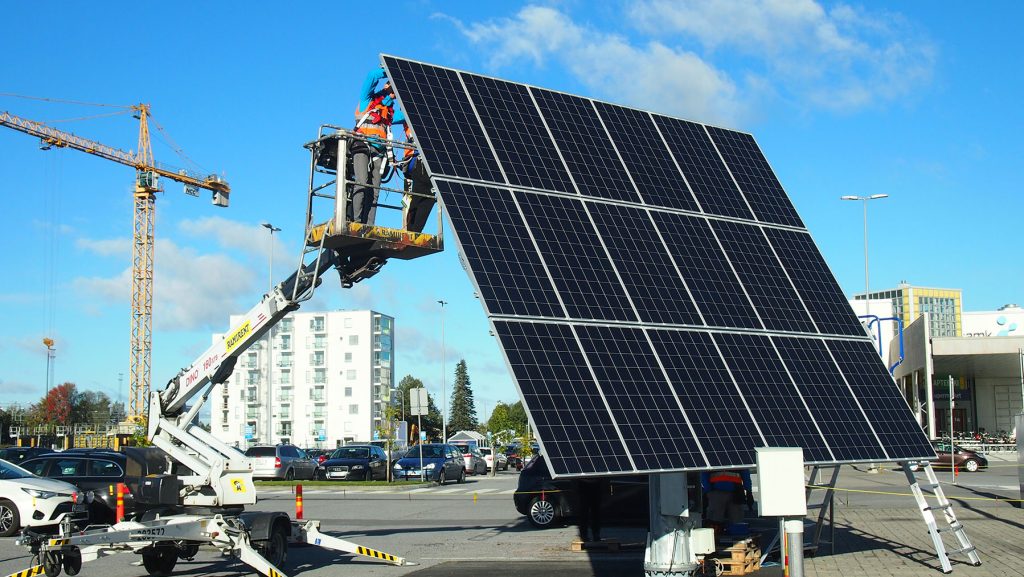
SAMK Pori Campus has also a solar photovoltaic system. In the photo a solar tracker, which is a part of the energy engineering learning environment.
Satakunta Rescue Department contacted SAMK to provide training on the subject.
– We gave tuition to Satakunta Rescue Department where the features of solar photovoltaic systems and buildings´ fire regulations were dealt with from the perspective of solar photovoltaic systems, tells Meri Olenius, who is the manager for the project.
– We are now preparing learning material on what solar photovoltaic systems really are and what should be taken into account if the rescue personnel are going to extinguish a fire at a target, which has a working solar photovoltaic system.
Security perspective included already at the planning stage
Properties do not necessarily yet have any marked information available on solar photovoltaic systems.
– For example a passer-by may notice a fire in the property and inform the rescue department about it. The passer-by does not necessarily know that there is a solar photovoltaic system in the property. Learning material is now being prepared at SAMK on how to approach a target securely, without knowing if there is a solar photovoltaic system, Meri Olenius describes.
SAMK is also preparing education that supports solar photovoltaic system planning, electrical safety and buildings´ fire regulations.
– Already when designing solar photovoltaic systems, it should be considered that they are safe for the rescue personnel. There are factors, which promote security already at the design stage.
A fire-fighting practice is being planned where a solar photovoltaic system is installed in a disused property, and then the property is burned in a controlled manner.
– This situation will be videotaped as learning material, Meri Olenius tells us.
Hardly any information available on the security of the systems
Solar photovoltaic systems have become increasingly more common in recent years. Mikko Puolitaival, Head of Risk Management at Satakunta Rescue Department, says that there has been very little information available on the security of the systems from the perspective of rescue operations.
– The subject has been dealt with in some theses, and the manufacturers have also given us information. However, the rescue department personnel and contractual fire brigade representatives have regularly expressed their wishes for further training on the subject, Mikko Puolitaival explains.
The training organized by SAMK met the needs well. The basics of electrical safety were the starting point and from there the subject was expanded to the security of solar photovoltaic systems form different perspectives.
– The rescue department personnel is rather a heterogeneous group, so designing training for them was quite a challenge. Those participating in operational work need very concrete guidelines for e.g. a fire scenario, and those doing supervisory work may need answers to e.g. questions related to legislation, Mikko Puolitaival names the issues. .
– I believe we received enough answers to all these perspectives. In particular, we learned about the solutions connected to the installations and structures of solar photovoltaic systems. In addition, every participant learned something new or at least could revise what they had learned about the very basics of electrical safety.
Info
Materials are produced as a part of Security of Solar Photovoltaic Systems in Fire Scenario project. The project is funded by Fire Protection Fund.
Read more
Read more
How international trainees represent the heart of SAMK
Meet the SAMK Pori Campus trainees, each of them represents a value that SAMK promotes.
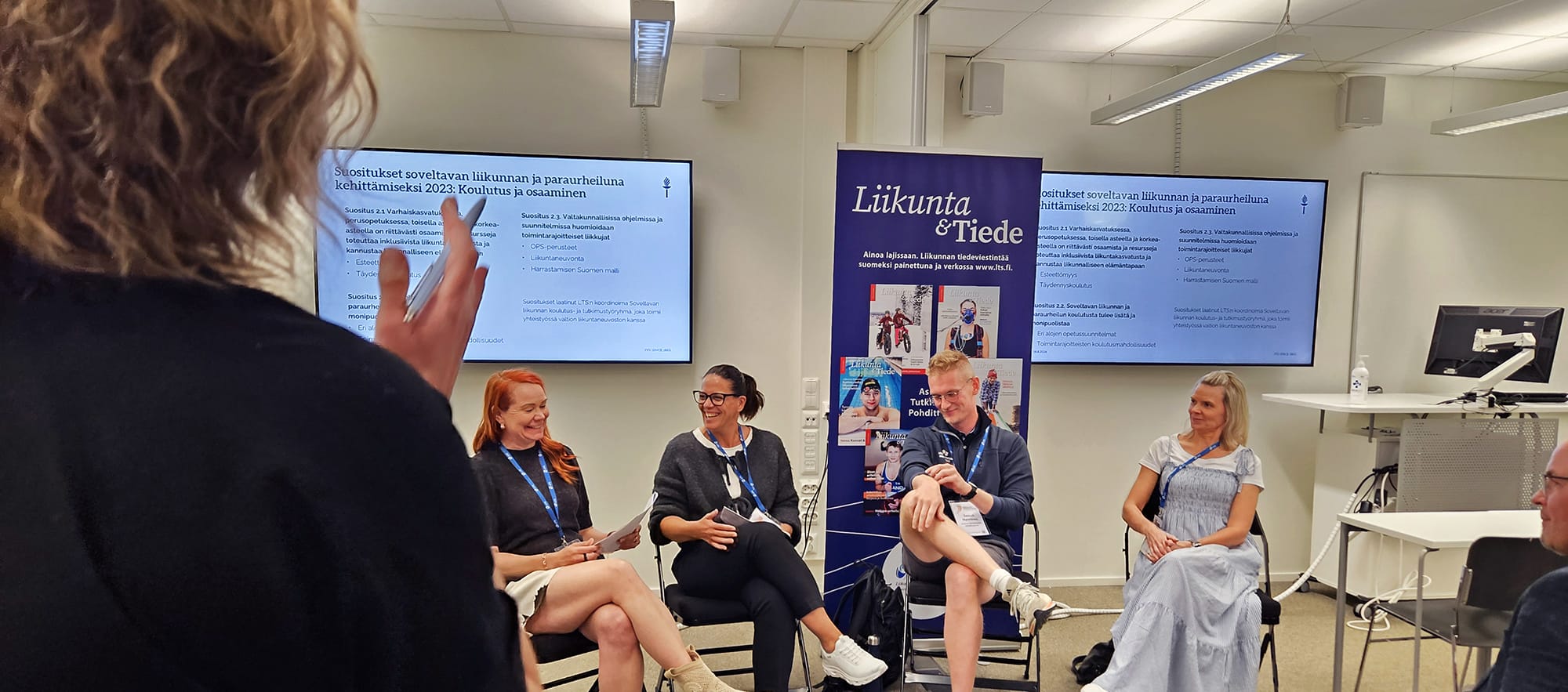
The seminar on adapted physical activity brought together experts and practitioners from the field at SAMK
Soveltavan liikunnan päivät (hereafter, Adapted Physical Activity Seminar), co-ordinated by the Finnish Society of Sports Sciences, was held this year at the SAMK Campus Pori. The two-day event brought together around 250 participants from across Finland.
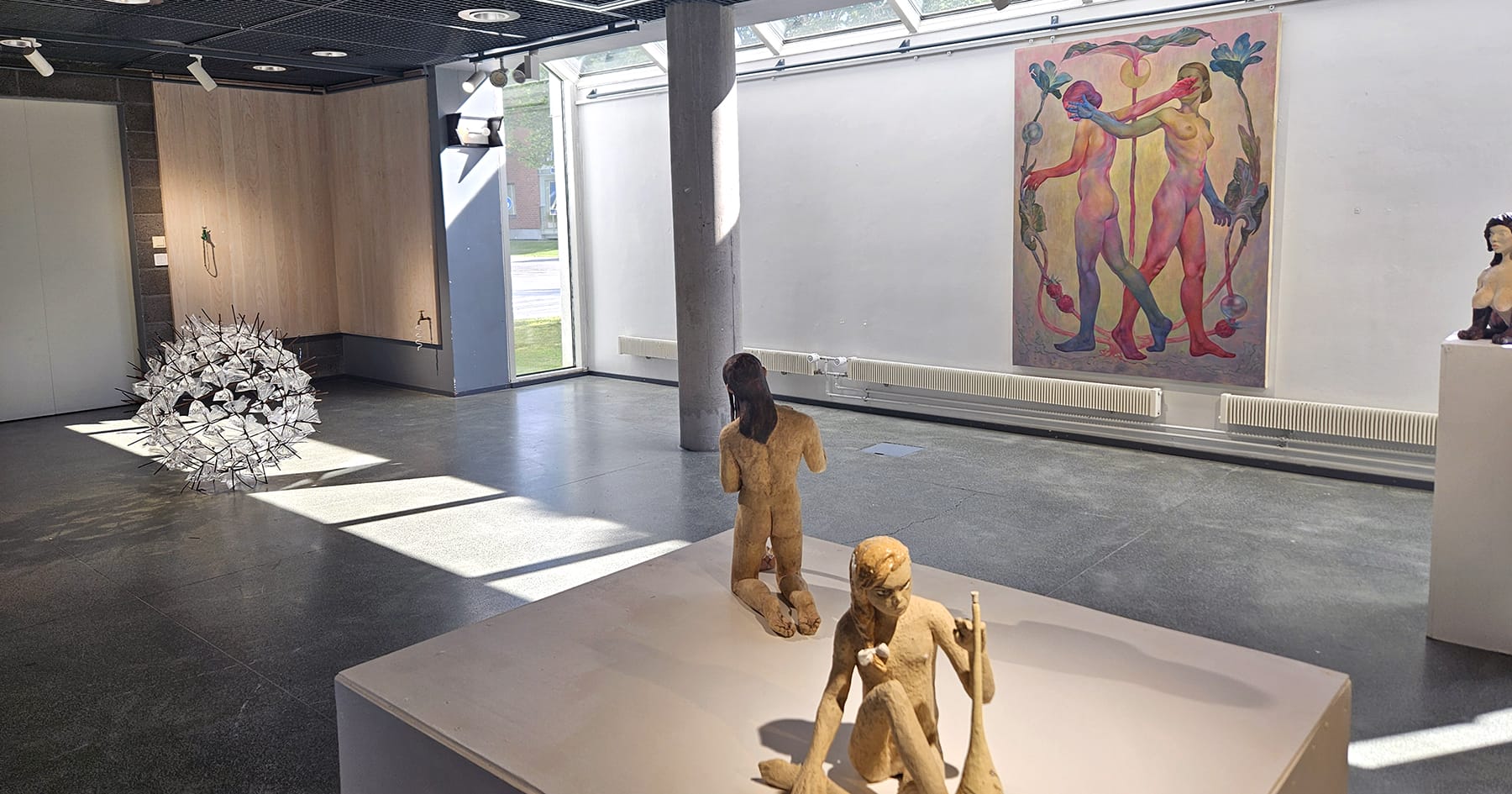
The first alumni exhibition showcases visual artists’ career paths
The first alumni exhibition, URA I, at the SAMK Fine Arts Campus in Kankaanpää, brings together visual artists who have graduated from Kankaanpää.