
Risk management challenges intelligent shipping
The route to intelligent shipping contains many uncharted waters, and in order to sail through them a broad network of cooperation and vision will be needed. Remote pilotage is one of the areas of research for Janne Lahtinen, Maritime Senior Lecturer, and his belief is that, with a better understanding of technology, we can move towards more efficient smart solutions, without compromising safety.
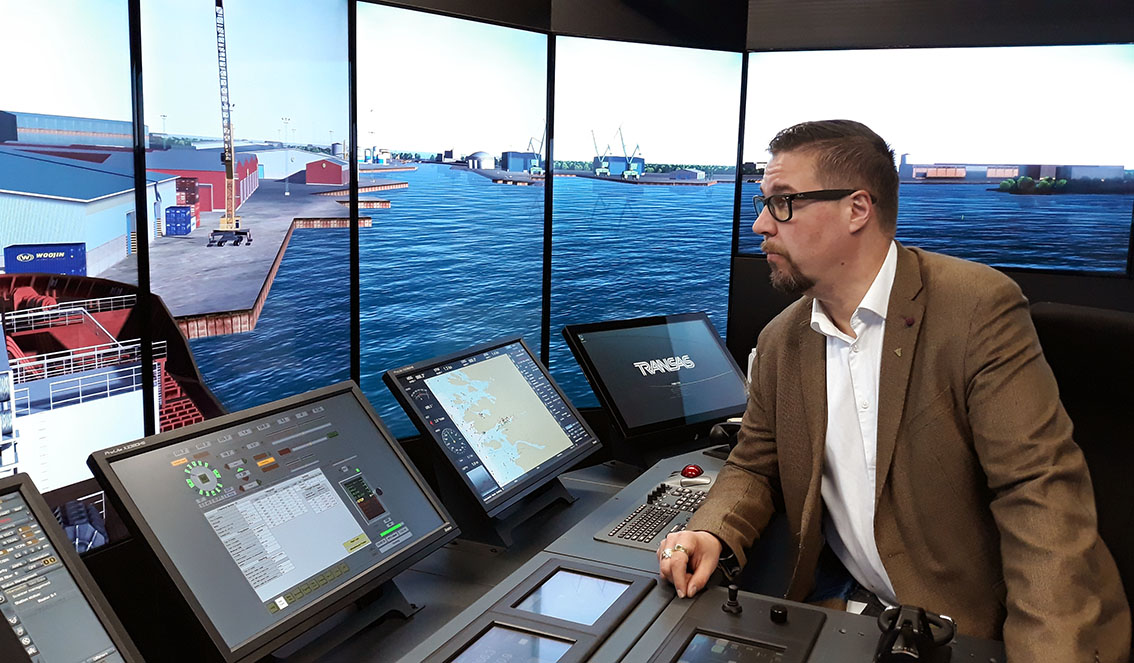
More about Istlab project.
Maritime is a continuously developing field, and changes do not happen overnight. The road to intelligent shipping is a long one, requiring innumerable studies and solid cooperation between the various interest groups. According to Janne Lahtinen, Maritime Senior Lecturer and researcher at SAMK (Satakunta University of Applied Sciences), risks present the greatest challenge.
– Risk identification and management are at the centre of everything. Smart technology offers numerous options for moving forward. It is impossible to manage unidentified risks completely, but we must start somewhere. At the beginning it will be necessary to make assumptions, in order to get something down on paper.
Developing intelligent shipping requires capital, giving rise to economic expectations. Intelligence is only a small part of the great shipping entirety, and this should be understood when carrying out development work.
– With today’s knowhow, we could already be achieving quite unbelievable goals. However, we cannot develop for the sake of development – there must be a commercial motive in the background that generates added value. Intelligent Shipping will only come into being, and only be funded, if we have a clear objective and commercial evidence of its viability. Technology is merely a means of reaching an objective; it is not an objective in itself, affirms Lahtinen.
Development to generate safety
Safety is of critical importance in maritime transport, as it is in all traffic.
– Safety is a so-called non-event, in other words, no anomalies take place. Safety does not happen – it is unsafety that happens. As an industry, Maritime is very capital-intensive, and it is often difficult to justify decisions merely on the basis of increased safety. The cost of materialised risks is generally very high, says Lahtinen.
When developing intelligent shipping, it is important to find those technologies which will genuinely create added value to all water traffic. The main emphasis is on commercial shipping, but the safety of all seafaring transport should also be taken into consideration at all times.
– Safety in traffic is always as strong as its weakest link. When developing technology, we should be able to increase the safety of all seafarers.
At the crossroads of new and old technologies
Although development may take place in marine transport quickly at times, not all the parts of the whole fit into place in the new technology simultaneously.
– We will be going through a period of transition, and to some extent we are already experiencing it now. Smart technology may be on the increase, but conventional vessels will still be in use for decades. Today’s technology will remain alongside the new for years to come, affirms Lahtinen.
As the use of smart technology increases, maritime crews also need a greater understanding of the technology. The maritime education at SAMK and the ISTLAB project are serving to meet this need.
– We are dealing with complex vessels and technology. The current systems contain thousands of separate, intercommunicative processes and automation. We at SAMK undertake to open people’s minds and increase their understanding of the technology to the greatest extent possible, Lahtinen explains.
There are also many things in marine transport that do not change over time. The main objective remains the same: the transfer of goods from A to B.
– Marine transport is a part of an enormous logistical building block. Intelligent shipping development work should serve to support this, and with the development of technology, it will be possible to attain goals faster and more safely.
Lahtinen, a member of the project steering group, believes that the ISTLAB project is well-suited playing field for developing the industry.
– ISTLAB is a brilliant environment and platform, with the aid of which we can test new technologies and understand the way they work, he enthuses.
Read more
Read more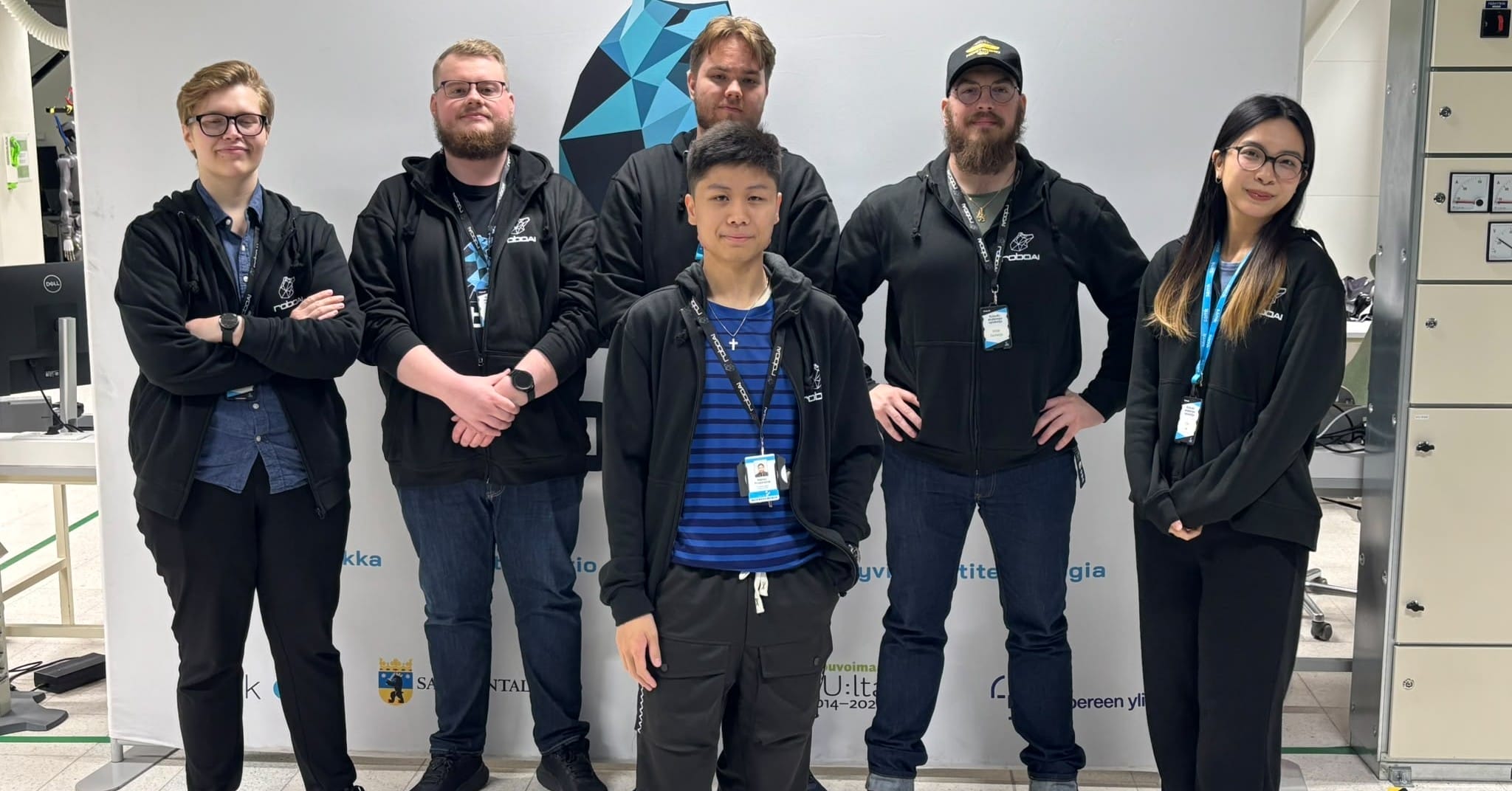
How international trainees represent the heart of SAMK
Meet the SAMK Pori Campus trainees, each of them represents a value that SAMK promotes.
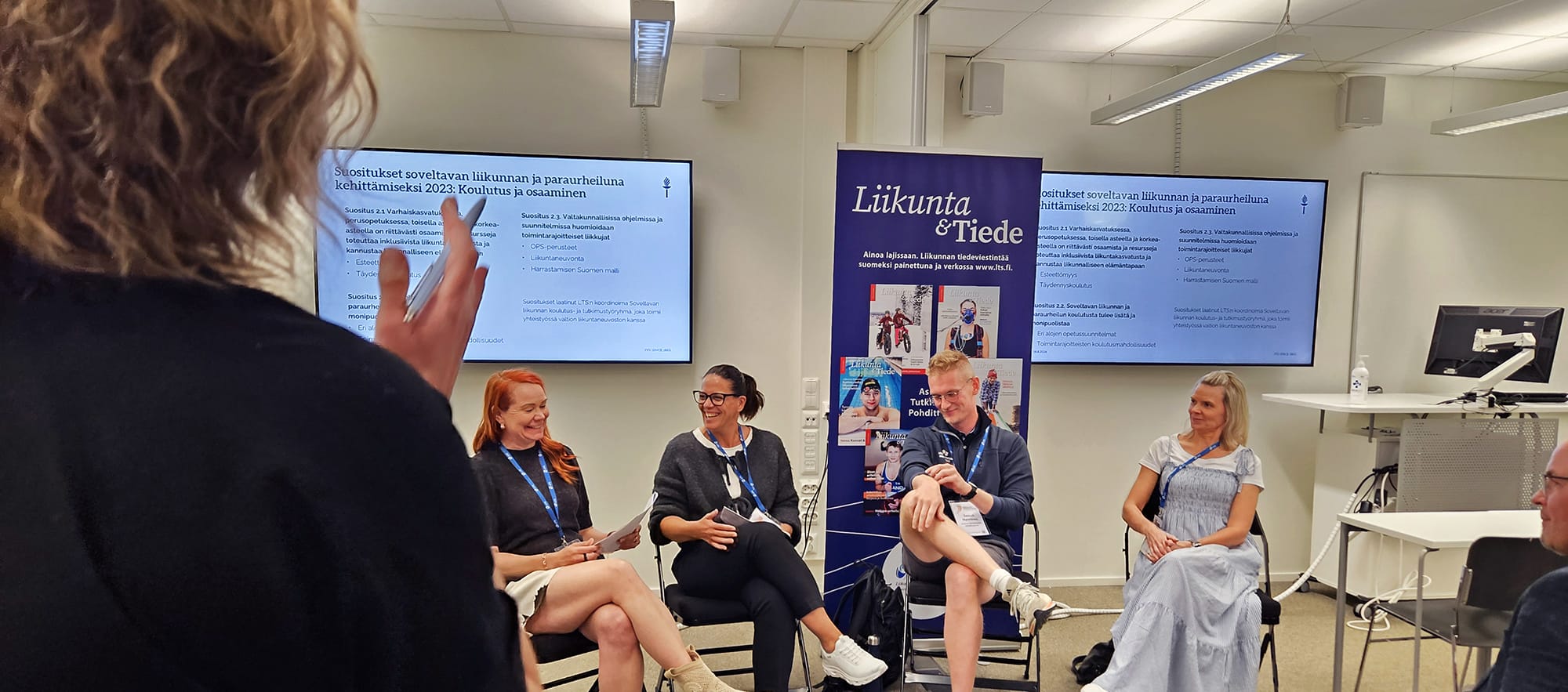
The seminar on adapted physical activity brought together experts and practitioners from the field at SAMK
Soveltavan liikunnan päivät (hereafter, Adapted Physical Activity Seminar), co-ordinated by the Finnish Society of Sports Sciences, was held this year at the SAMK Campus Pori. The two-day event brought together around 250 participants from across Finland.
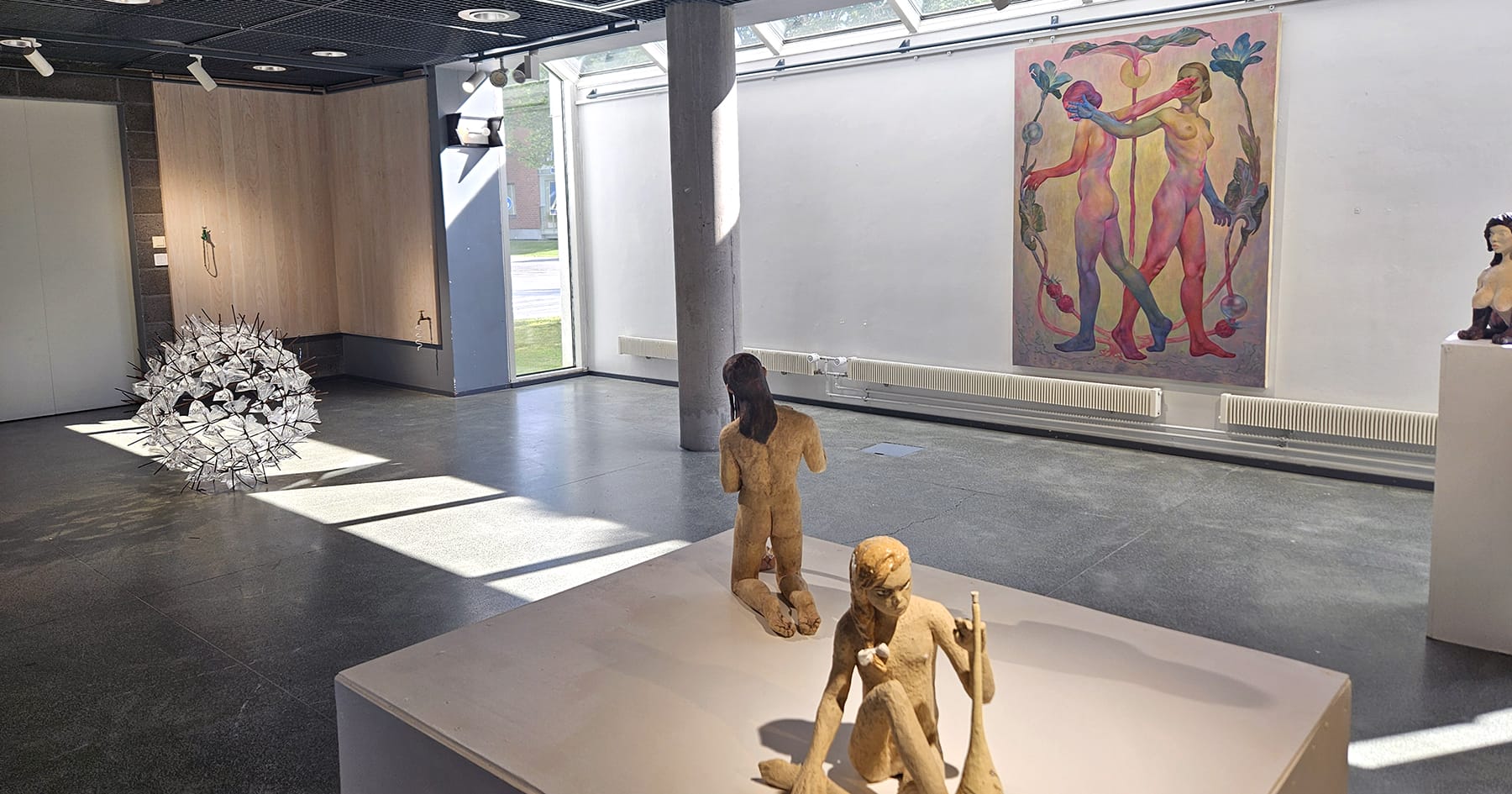
The first alumni exhibition showcases visual artists’ career paths
The first alumni exhibition, URA I, at the SAMK Fine Arts Campus in Kankaanpää, brings together visual artists who have graduated from Kankaanpää.