Seafaring is a global field: South African and European seafaring education are developed together
- In South Africa we want to ensure that our seafarers are globally competent and first class, states mechanical engineering teacher Howard Theunissen from Nelson Mandela University (NMU) in South Africa. NMU coordinates the project where marine engineer and sea captain education in three European and three South African higher educational establishments is developed.
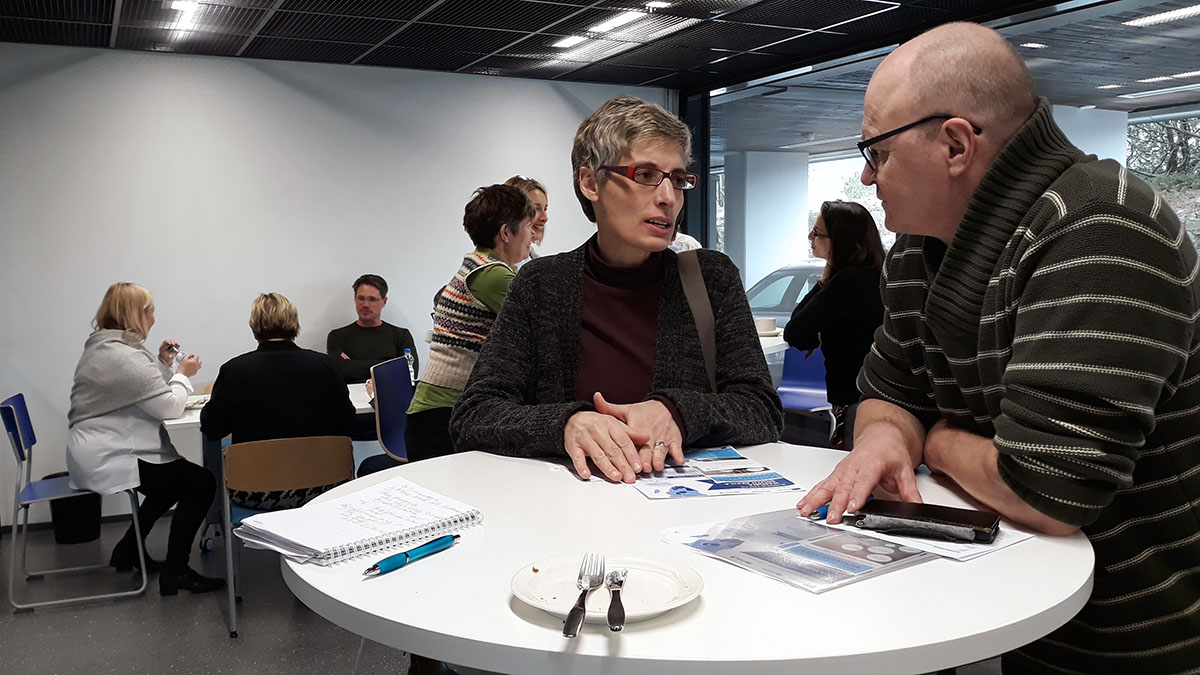
Sanja Bauk having a discussion with Heikki Koivisto about possible cooperation also in SME Aisle project.In the background Meri-Maija Marva, Howard Theunissen and Sauli Ahvenjärvi.
– The main issue is to compare the contents and pedagogy of educations, to see the methods of teaching, says Theunissen.
In addition, the goal is to offer students possibilities for student exchange. The aim is among other things to create comparable study modules – and eventually do research together later.
Fight for competent teachers
According to Theunissen, universities educating marine engineers and sea captains in South Africa need to develop facilities and upgrade technology but he says it´s being done all the time, that´s not a problem.
– Our real struggle concerns skilled work force, i.e. to find seafaring professionals who have high enough qualification as teachers.
The project is hoped to bring quality with mobility of staff: to have teachers arriving for short exchanges and own teachers acquiring new knowledge from exchanges.
The project is hoped to bring quality with mobility of staff: to have teachers arriving for short exchanges and own teachers acquiring new knowledge from exchanges.
Dr. Sanja Bauk from the South African Durban University of Technology tells that she sometimes thinks about the huge amount of administrative paperwork needed in Erasmus+ funding applications and project meetings, as it is all off the time used for research. However, she realizes the advantages.
– Networking is beneficial, and it might result in cooperation, at best. Besides, the so called third world countries will get funding to improve their operations.
Personally Dr. Bauk, who is Montenegrin and moved to South Africa a year ago, is delighted to meet new people and getting to know new cultures – and to broaden her skills and learn new things.
—
The representatives of six higher educational establishments met in February in Germany and Rauma, Finland. The other partners are Cape Peninsula University of Technology, Hochschule Wismar and Southampton Solent University.
EURO-ZA project is funded by EU Erasmus+ program (15 November 2018 – 14 November 2021)
For more information, contact project manager Meri-Maija Marva, tel. +358 44 710 3120, meri-maija.marva@samk.fi
Read more
Read more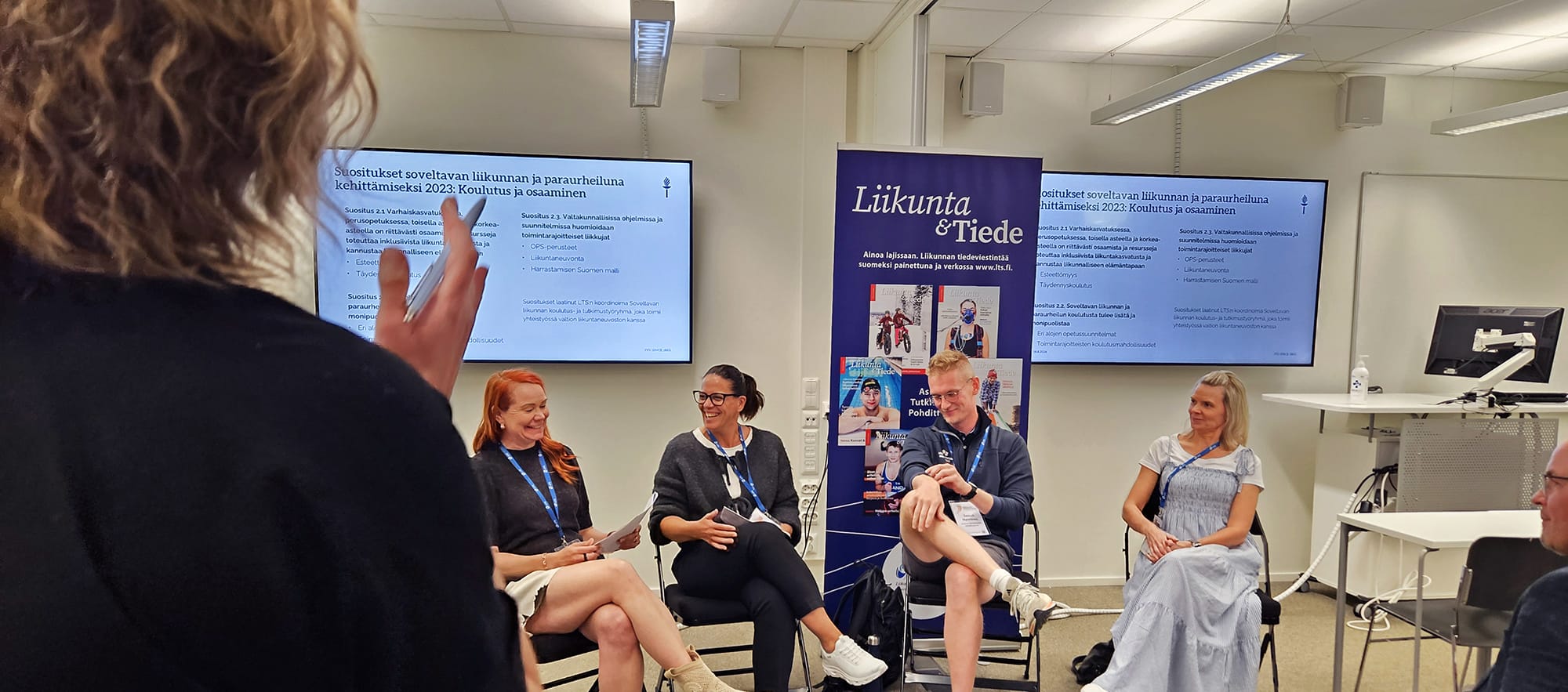
The seminar on adapted physical activity brought together experts and practitioners from the field at SAMK
Soveltavan liikunnan päivät (hereafter, Adapted Physical Activity Seminar), co-ordinated by the Finnish Society of Sports Sciences, was held this year at the SAMK Campus Pori. The two-day event brought together around 250 participants from across Finland.
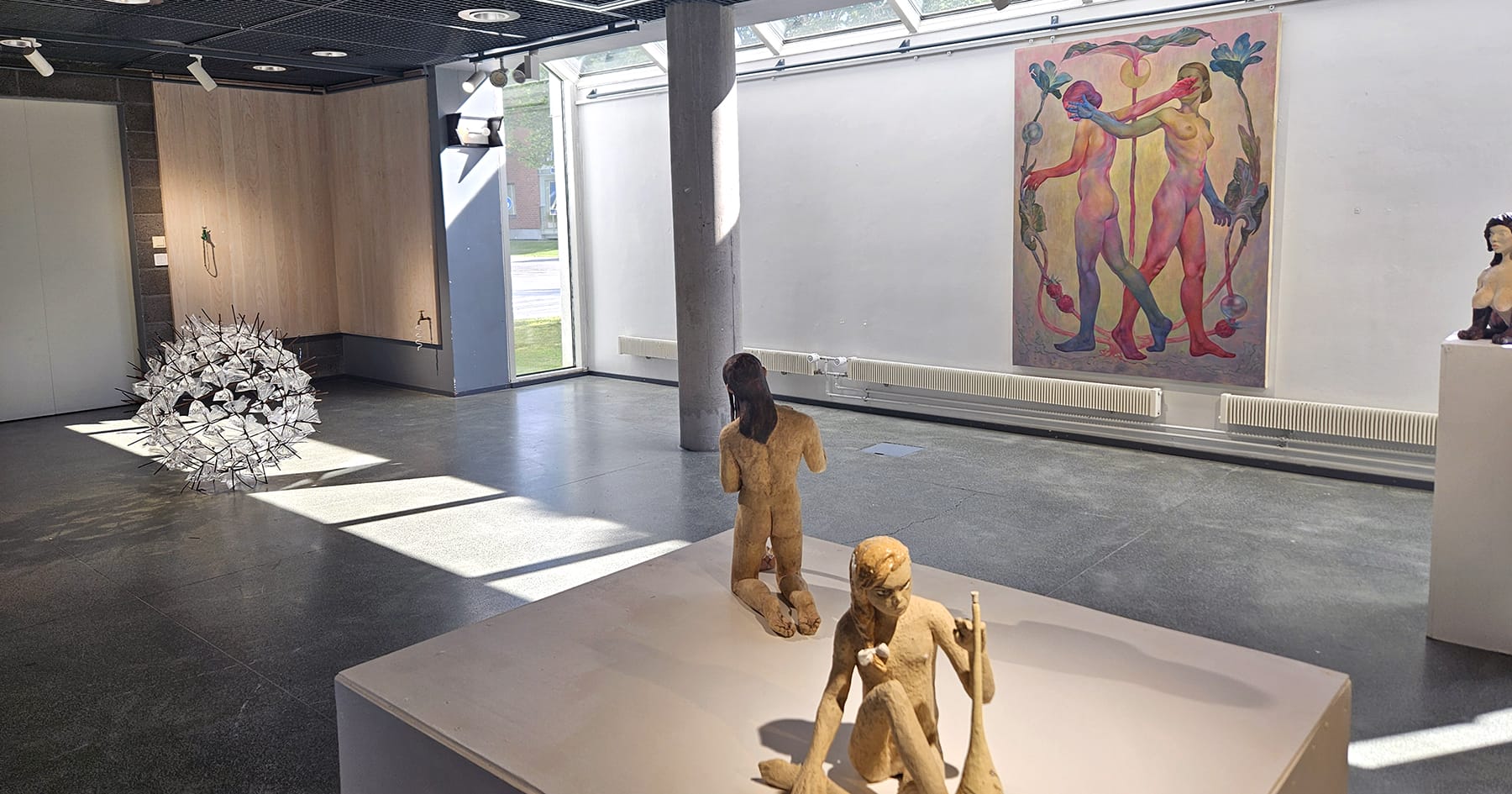
The first alumni exhibition showcases visual artists’ career paths
The first alumni exhibition, URA I, at the SAMK Fine Arts Campus in Kankaanpää, brings together visual artists who have graduated from Kankaanpää.
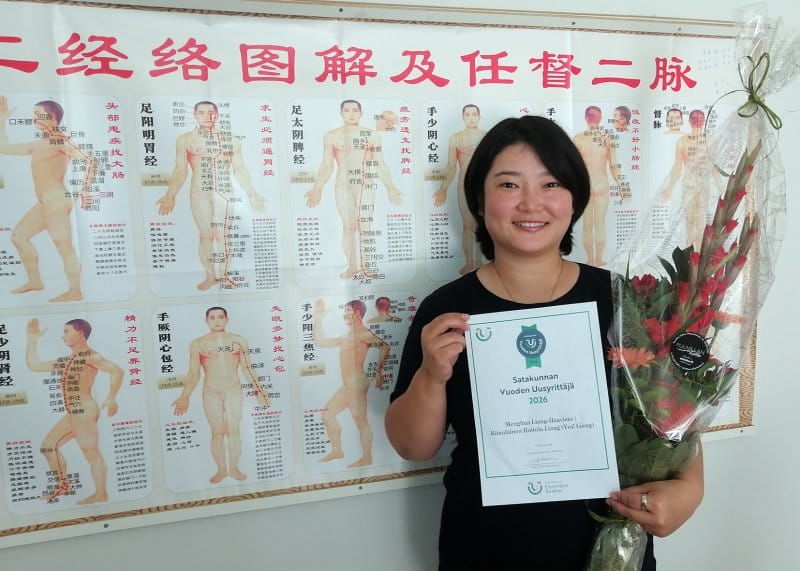
SAMK alumna Menghua Liang-Haavisto named Satakunta’s New Entrepreneur of the Year
Menghua Liang-Haavisto from Pori, entrepreneur and founder of Kiinalainen Hoitola Liang, has been named the winner of the Satakunta New Entrepreneur of the Year 2026 competition. This was the fifth time the annual award was presented.