
Intelligent Shipping Technology Test Laboratory in the eye of future maritime development
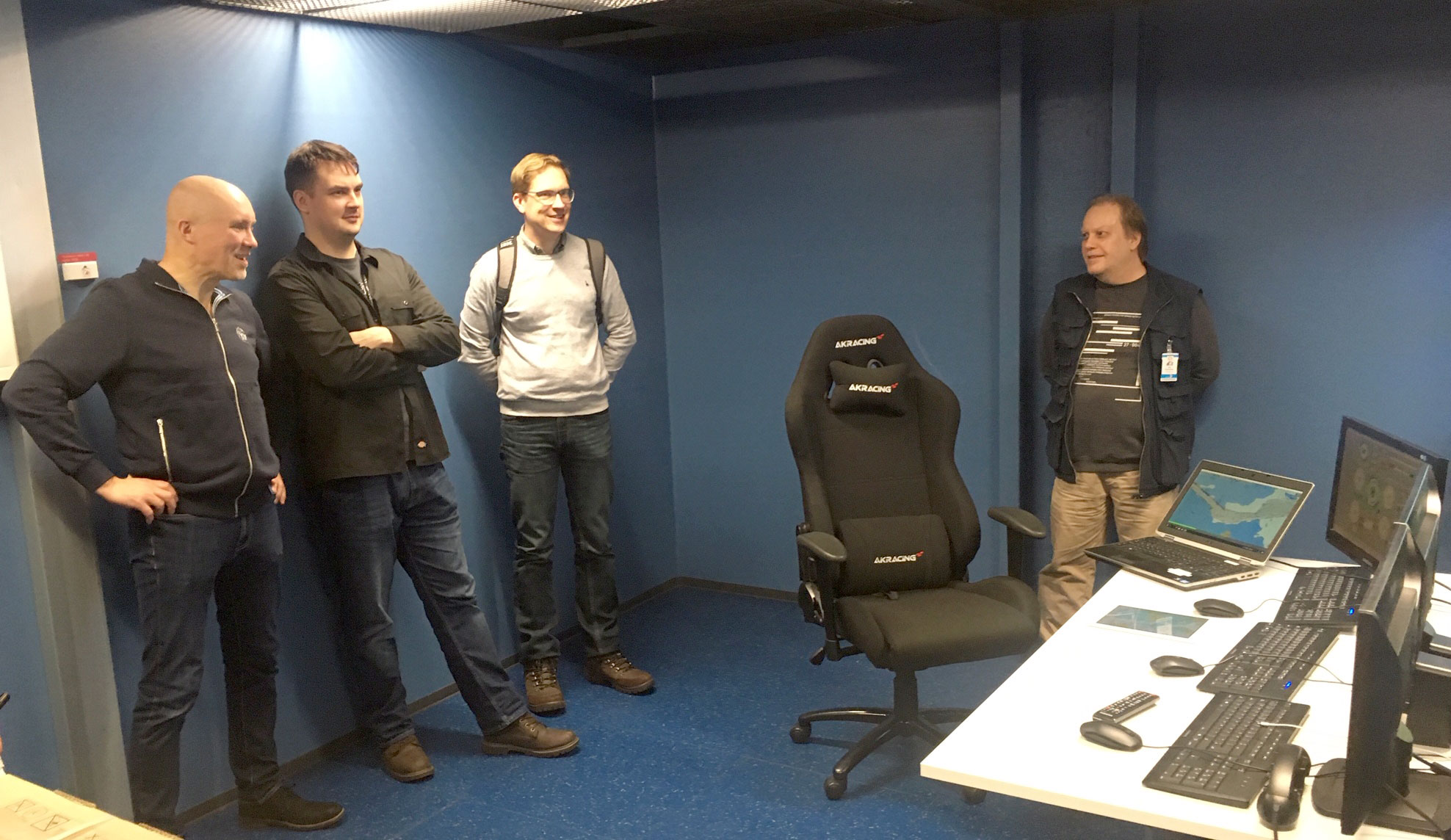
Representatives of the Finnish Transport and Communications Agency’s representants Waltteri Laine, Jouni Lappalainen, Markku Karkama ja Esa Pasanen visiting the test laboratory. The simulator is presented by Jari Kumlander on behalf of the SAMK project group.
The meetings hosted by Satakunta University of Applied Sciences (SAMK) were influenced by the development needs of the international maritime cluster such as maritime safety, cost efficiency and emission reductions. Needs which ISTLAB aims to answer through the advancement of a unique test laboratory and simulator.
“Both visits by the Traffic Management Finland and the Finnish Transport and Communications Agency of Finland aimed to get the collaborative partners onboard the current circumstances of the test laboratory. Particularly in terms of remote pilotage, a technique chosen as the most effective in enhancing cost efficiency and effectivity,” Sauli Ahvenjärvi, Project Specialist and Principal Lecturer of SAMK, explains.
Representatives from Traffic Management Finland including Jouni Patrakka, Mika Nyrhilä and Juho Pitkänen visited the test laboratory on the 9th of December 2019. During this visit, even Head of Technology of FinnPilot Pilotage Ltd. Vesa-Matti Kantala was present. Finnish Transport and Communications Agency’s representants Waltteri Laine, Jouni Lappalainen, Markku Karkama ja Esa Pasanen followed suite a week later.
“Both meetings left us feeling encouraged. The project corresponds with the demands of the industry and the future of maritime development. We are certainly on the right track,” assures Ahvenjärvi.
The track continues long into the future, as planned by Ahvenjärvi. “We meet with project collaborators in order to also map out any future urgencies the maritime cluster might have. While ISTLAB continues to answer current challenges such as cost efficiency, we are already planning way ahead.”
“This is information sharing which goes two-ways. It is in our benefit to inform collaborative partners of the proceedings in the test laboratory while keeping ourselves updated on industry wishes. Research is a constant and ongoing discussion, because we believe in finding real solutions” confirms Ahvenjärvi.
Additional information:
Meri-Maija Marva | Project Manager
Satakunta University of Applied Sciences | Faculty of Logistics and Maritime Technology
+358 44 710 3120 | meri-maija.marva@samk.fi | istlab.samk.fi/
Read more
Read more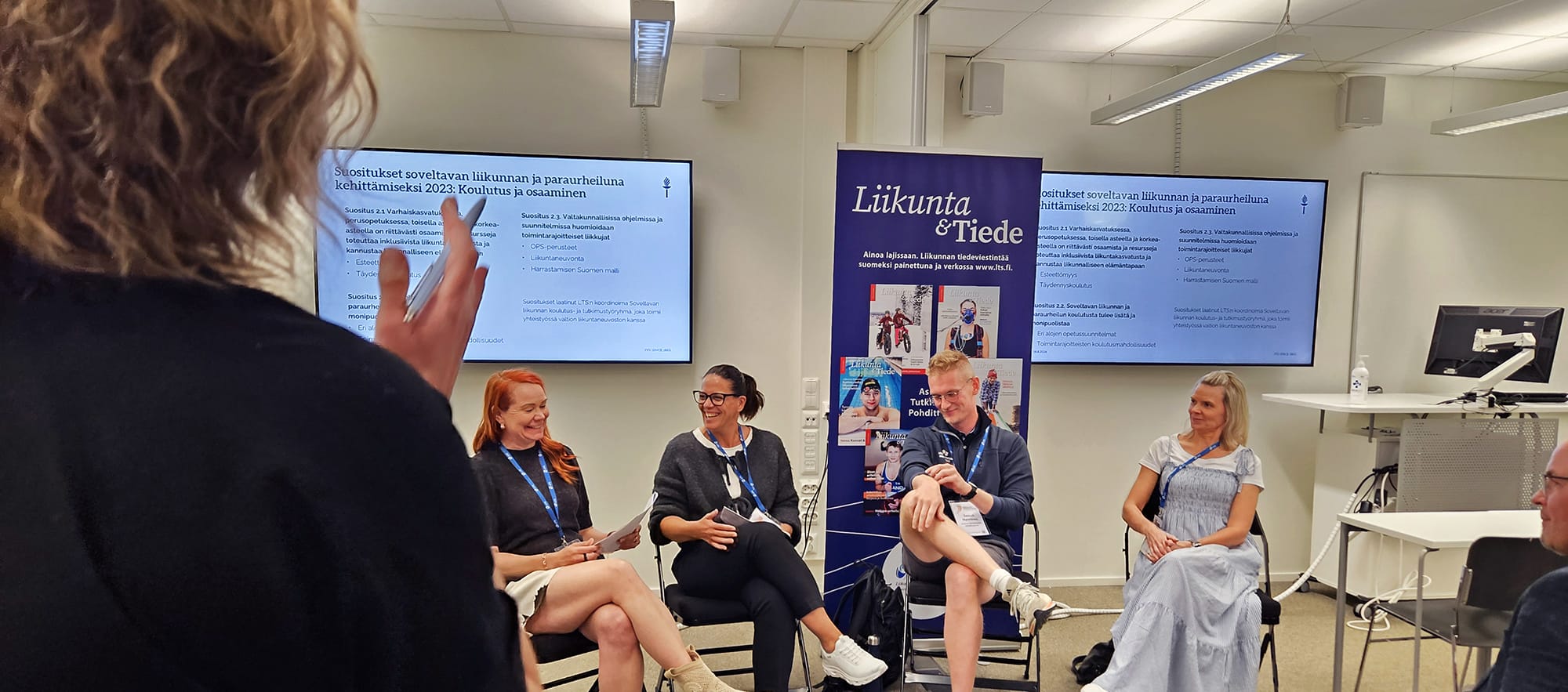
The seminar on adapted physical activity brought together experts and practitioners from the field at SAMK
Soveltavan liikunnan päivät (hereafter, Adapted Physical Activity Seminar), co-ordinated by the Finnish Society of Sports Sciences, was held this year at the SAMK Campus Pori. The two-day event brought together around 250 participants from across Finland.
Center of Expertise for Resource Wisdom strengthens Satakunta’s competitiveness
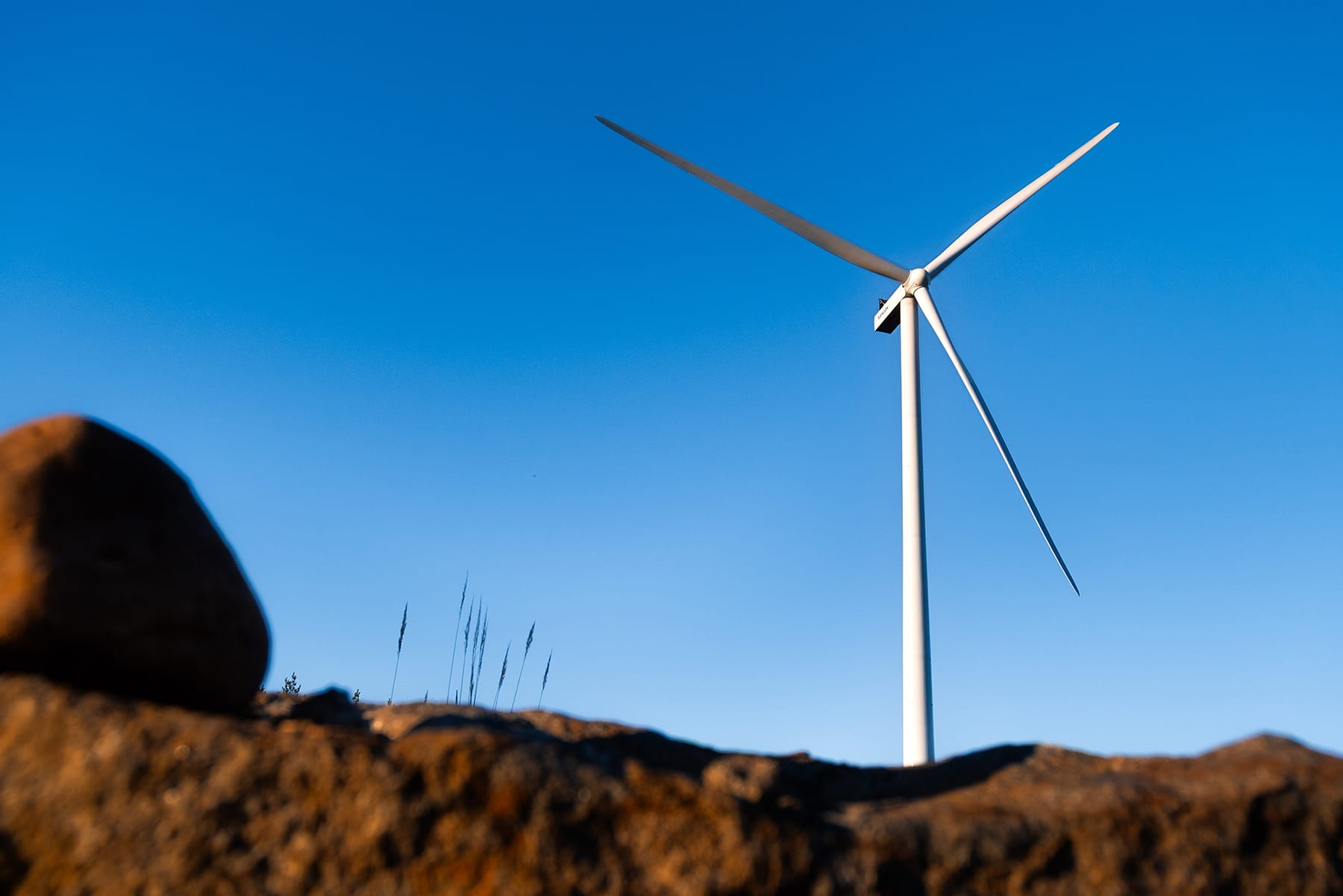
SAMK’s new Center of Expertise for Resource Wisdom brings together the expertise of around 30 researchers and lecturers. The Center develops solutions for sustainable growth, competitiveness and security of supply. The Center has an ambitious long-term goal: to make Satakunta Finland’s most resource-wise region.
SAMK at SuomiAreena, in themes of space technology, expertise and a sustainable future
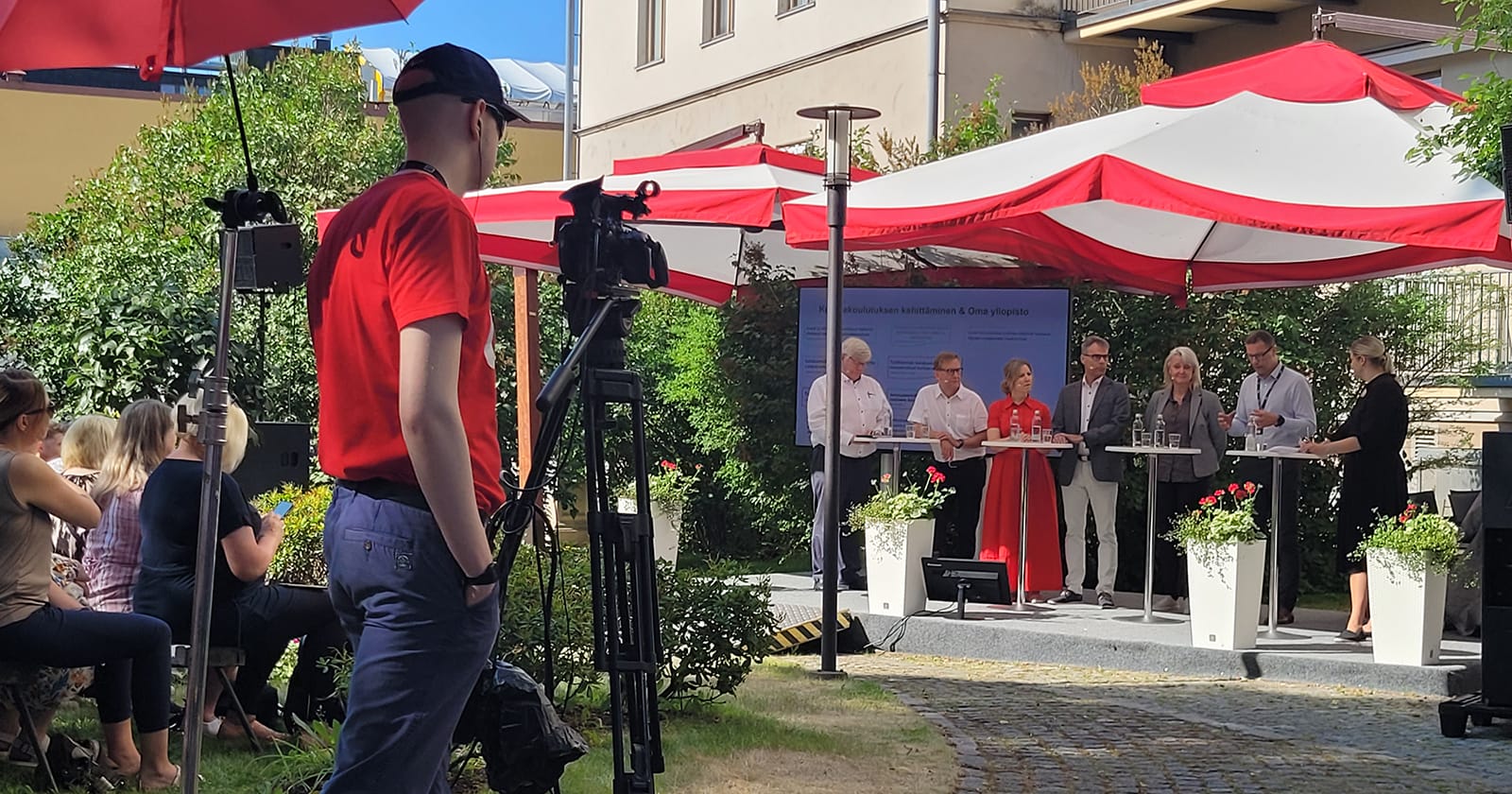
SAMK will participate in SuomiAreena in Pori from 23 to 26 June 2026. SAMK will be contributing both the Kansalaistori (Citizen square) programme and SuomiAreena’s Suuri avaruuspäivä (Big Space Day) which will explore the opportunities offered by space technology and Finland’s role as a future success story.