A step towards the future – ROS software environment offers many possibilities
– For software companies ROS (Robot Operating System) is a way to use robotics and automation operating in languages already familiar to them. For companies in robotics and automation this is also a good opportunity to find skilled workers, save in costs and innovate new products, says Toni Aaltonen, a researching lecturer at Satakunta UAS, also the project manager of Rokokoo.
.
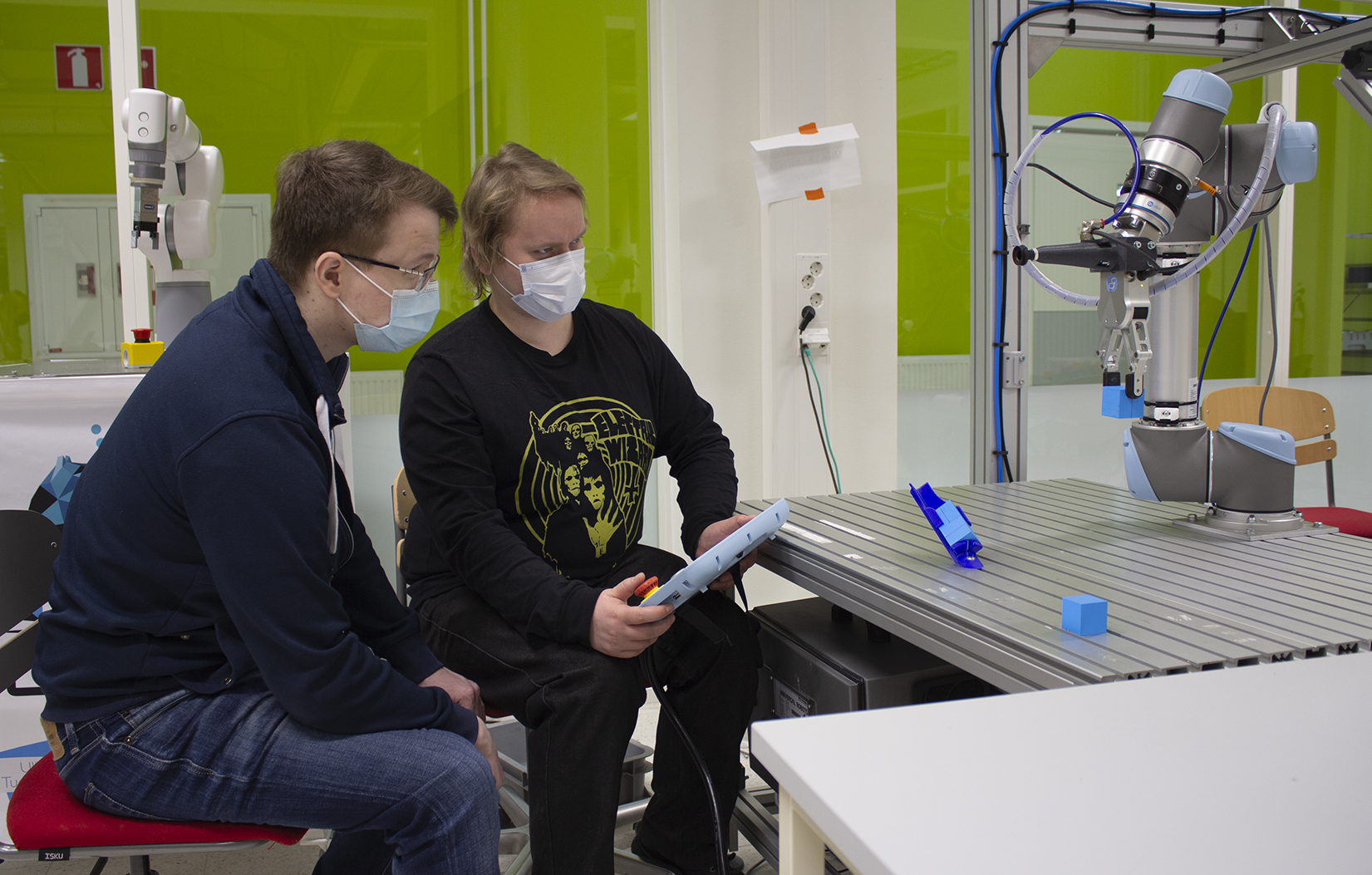
ROS presented at RoboAI week in November. Universal Robots UR5 collaborative robot is also based on ROS.
Over 100 people have participated to this new training since last October when it started, notwithstanding the COVID19 restrictions and distance learning methods.
-Now the third ROS training course is going on. We have had around 30 students at every course, most of them unemployed job seekers. After the first basic training course around 20 students participated on the further training. We are happy with the number of students, says Mr. Aaltonen.
More experts for Satakunta
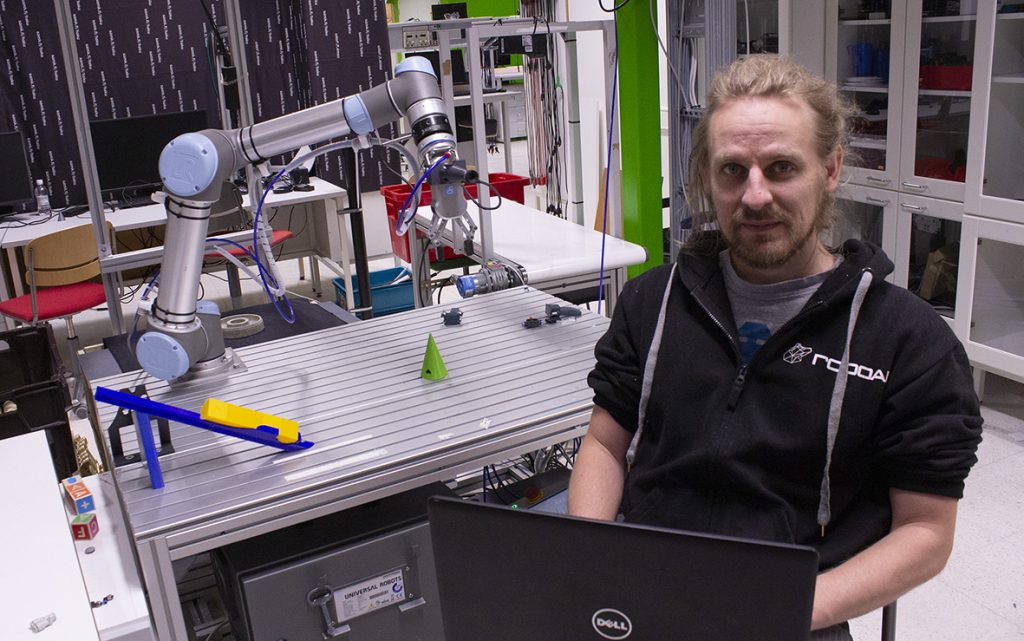
The training is free of charge. No prior knowledge or studies in robotics are needed. Our target groups are professionals looking for special ROS training and unemployed jobseekers. The participants leave the training with different skills and knowledge, the level of which may vary a lot between the individuals on the same course, but we still think these students create a great pool of potential competences for Satakunta region.
– Some students are very talented, so we should quickly get them on the job market, Aaltonen says.
During the basic training, the students learn how to approach ROS. They study the basics of Linux, virtual machines and version management tools. The training begins from the basics but advances rapidly so students must be perseverant.
– Students have participated actively in the training. According to their feedback the studies are generally useful even in the case ROS would not be used at work. These studies may be a bit difficult but manageable in the end.
During the further training, the students become more familiar with ROS and AI, they learn about modern AI technics, neural networks and how to use them. The third course concentrates on ROS in mobile robotics and the fourth one on how to use ROS in industrial and collaborative robots.
Together with the companies
Some concrete examples of ROS are collaborative robots, mobile robots and many robots in our everyday life nowadays, like robot vacuum cleaners and robot lawn mowers. BMW self-driving cars are based on artificial intelligence and ROS.
– ROS will be in the center of the development of the future programming environment. ROS is based on open-source code, so it is cheap to use. It also saves the number of working hours in mobile robot manufacturing. However, using open-source code does not mean that a company could not build a closed system as well, not everything has to be shared with others, reminds Mr. Aaltonen.
Companies in Satakunta have been relatively eager to participate in ROS training, but Mr. Aaltonen encourages especially the automation, robotics and software companies to contact Satakunta UAS and use the possibility to get the training for free. The next ROS basic course begins in August or September.
More information:
Toni Aaltonen, Project manager for Rokokoo, Lecturer and Researcher
p. 044 710 3998
toni.aaltonen@samk.fi
Read more
Read more
Our students will be employed: A brave step from Bangladesh to Finland
When Taslima Akter moved from Bangladesh to Finland to study International Tourism Management at SAMK, she was determined to build a better future. Through hands-on projects, international experiences, and strong student support, she turned her dream into a professional career.
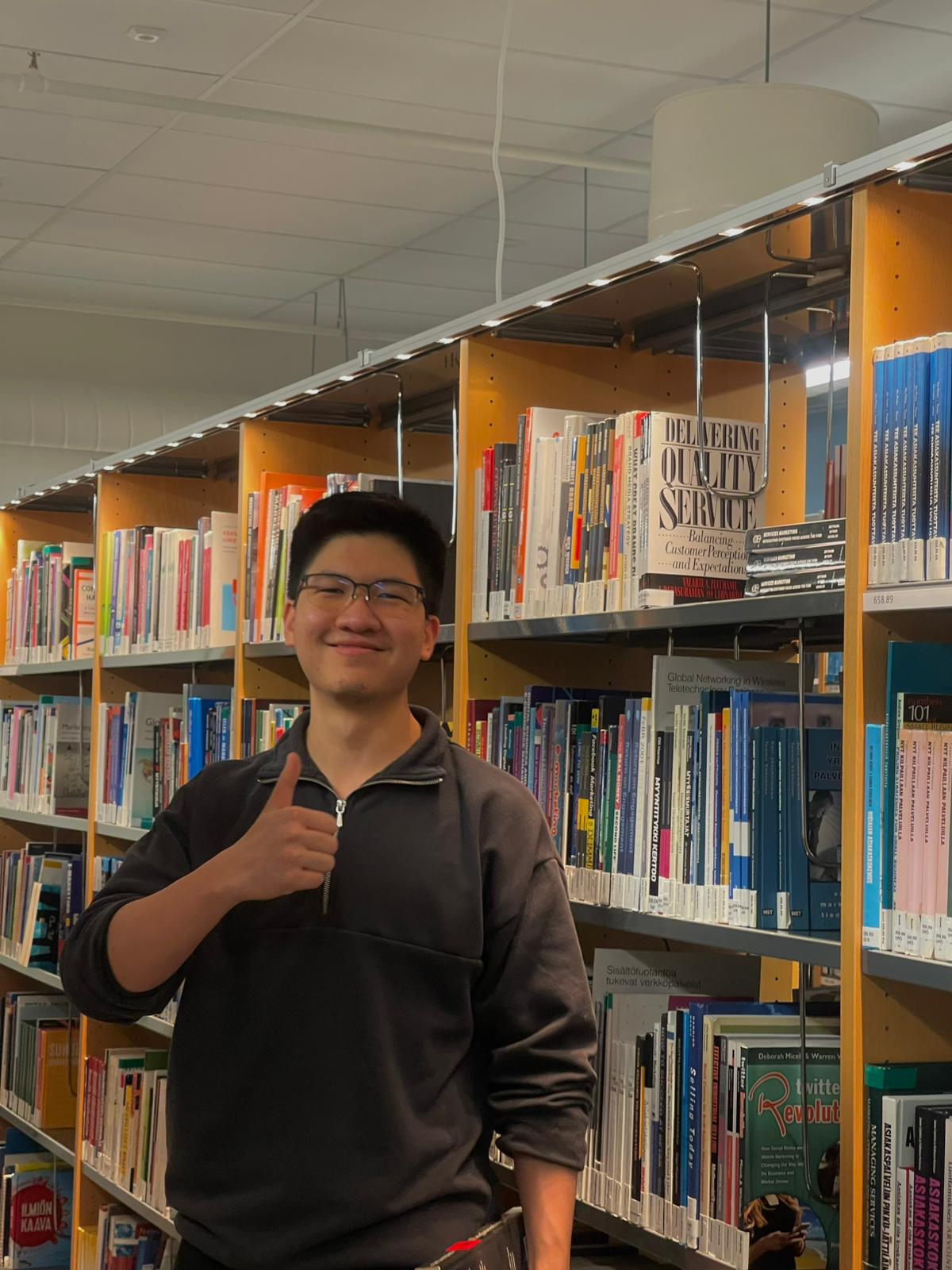
Our students will be employed: 'Ken'Jirayu Vasutheprungsun and the wide range of mechatronics
From Thailand to Finland, Mechatronics student ‘Ken’ Jirayu Vasutheprungsun found not only a practical and hands-on approach to engineering studies at SAMK, but also a chance to pursue his passion for technology, racing culture, and building a future in Finland.
Growth continues – A record number of students graduated from SAMK again in 2025
In 2025, Satakunta University of Applied Sciences (SAMK) once again reached a record high in the number of graduates. The number of graduates has increased for several consecutive years.